

.svg)

DONATE

Leaving an abusive relationship can take enormous courage. You may imagine that once you walk out the door, move into a new home, or finalize the separation, the abuse will finally stop.
But for some women, leaving does not end the abuse.
It changes it.
The constant criticism inside the home may become dozens of texts and phone calls. Financial control may turn into withheld support payments. Threats may involve the children. Monitoring may move from checking your phone to tracking your location or watching your social media.
This is known as post-separation abuse.
Recognizing this matters because abuse does not stop being serious simply because a woman has left the relationship.
Post-separation abuse is abusive or controlling behaviour that continues, or sometimes escalates, after a relationship ends. It can be part of coercive control, a pattern of behaviour used to intimidate, isolate, dominate or maintain power over another person.
Justice Canada notes that coercive and controlling violence is particularly likely to continue or escalate after separation. The abuse may no longer look the way it did during the relationship, which can make it harder to recognize.
There may be no shared home anymore. There may be no visible injuries. But the fear, pressure and control can still be very real.
Post-separation abuse can take many forms.
It might look like an ex-partner:
Individually, some of these actions might be explained away. But when they form a pattern designed to frighten, punish or control someone, they should not be dismissed as simply a “difficult breakup.”
Yes. This is one of the reasons post-separation abuse can be so confusing. You may hear:
“Just block him.”
“Why are you still talking to him?”
“You already left. What else can he do?”
But when you share children, finances, legal proceedings, immigration matters, family relationships or a community, cutting off all contact may not be easy, or even possible.
And leaving does not automatically remove the other person's ability to exert control.
Statistics Canada found that among people who experienced violence from a former spouse, 45% said violence occurred after separation. Among those who experienced post-separation violence, nearly four in ten said it continued more than six months after the separation.
More recently, police-reported data from 2024 showed that former partners accounted for about 35% of women and girls who were victims of police-reported intimate partner violence where the partner relationship was identified.
Leaving matters. But leaving is not always the end of the story.
Every woman's circumstances are different. But some Muslim women may also be navigating additional pressures around separation. There may be fear of judgment from relatives or the community. There may be pressure to reconcile. Someone may tell her to be more patientto keep the family together, or to stay silent for the sake of the children.
There may be financial dependence, immigration concerns, or fear about starting over without a strong support system.
Religion may even be misused by another person to pressure her into accepting behaviour that is harmful or controlling.
These barriers can make asking for help feel incredibly complicated.
Seeking safety does not mean you have failed your family, your community, or your faith.
And experiencing abuse does not become acceptable simply because the relationship has ended.
You do not need to have everything figured out before asking for help.
You also do not need to wait for something “worse” to happen before taking your concerns seriously.
Depending on your circumstances and what is safe for you, you might:
If you believe your phone or accounts are being monitored, consider using a safer device when looking for support.
And if you are in immediate danger in Canada, call 911.
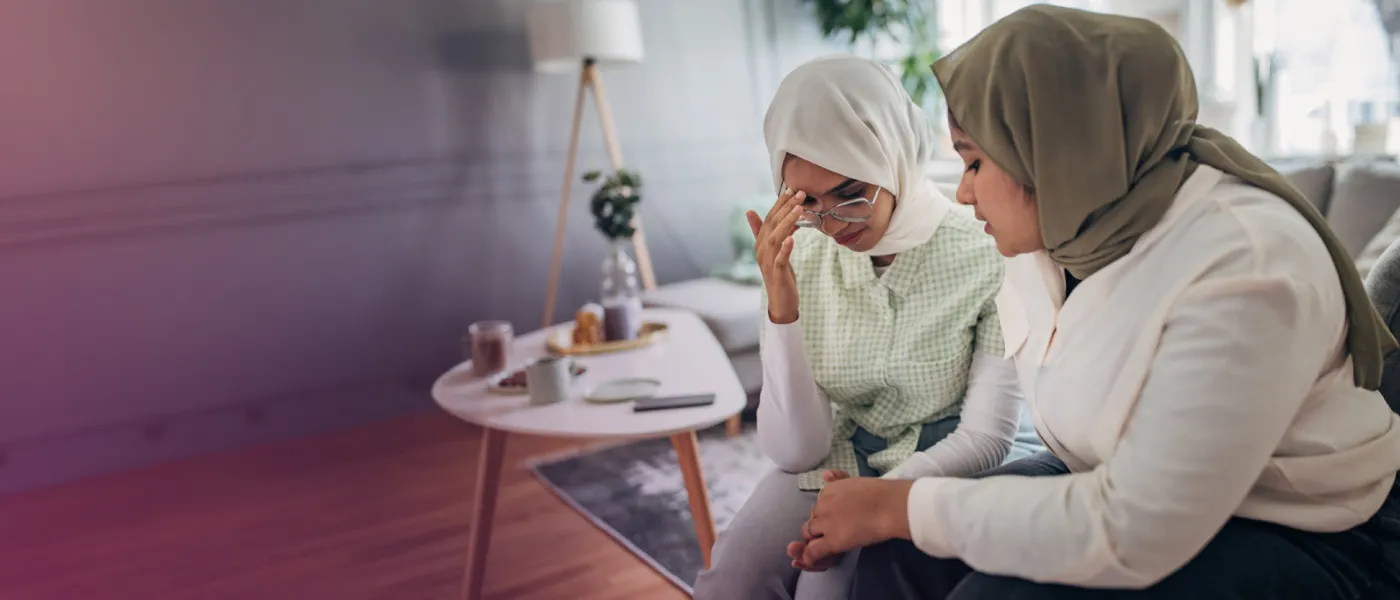
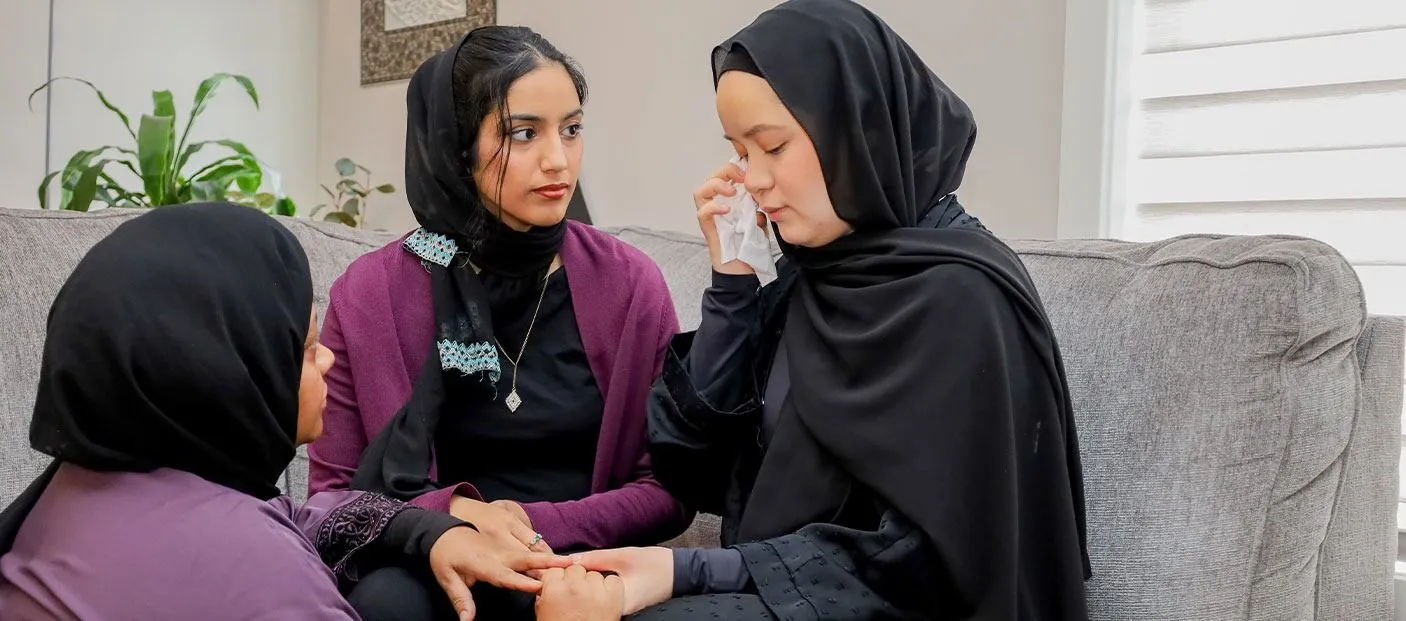
You do not need to have the perfect words or all the answers. What matters most is that she feels believed, supported, and safe enough to keep talking.
Instead of responding with questions that may sound blaming or dismissive, try to centre her safety and what she needs in that moment.
Rather than asking, “Why don’t you just block him?” you might ask:
“What would help you feel safer right now?”
Instead of, “Why is this still happening if you left?” try:
“I’m here. You don’t have to deal with this alone.”
Listen without judgment. Respect her privacy. Avoid confronting the abusive person yourself if doing so could increase the risk to her.
Sometimes, being believed and met with compassion can be an important first step toward seeking further support.
Every year from November 25 to December 10, the 16 Days of Activism Against Gender-Based Violence brings people around the world together to speak out against violence toward women and girls.
Part of that work is challenging the idea that abuse ends the moment a relationship does.
Leaving can be the first step toward safety, but it can also bring new challenges, risks, and uncertainty. Survivors deserve support through every stage of that journey.
If you or someone you know is experiencing abuse, controlling behaviour or harassment, you do not need to be certain about what to call it before reaching out.
You can simply start with: “Something doesn't feel right.”
Nisa Helpline provides free, anonymous and confidential support for Muslim women and girls, including culturally and spiritually sensitive peer counselling, guidance and referrals.
Call Nisa Helpline: 1-888-711-6472
Available seven days a week from 8 a.m. to midnight ET.
If you are in immediate danger, call 911.



























































.webp)


.webp)












.webp)






.svg)


.svg)


