

.svg)


DONATE
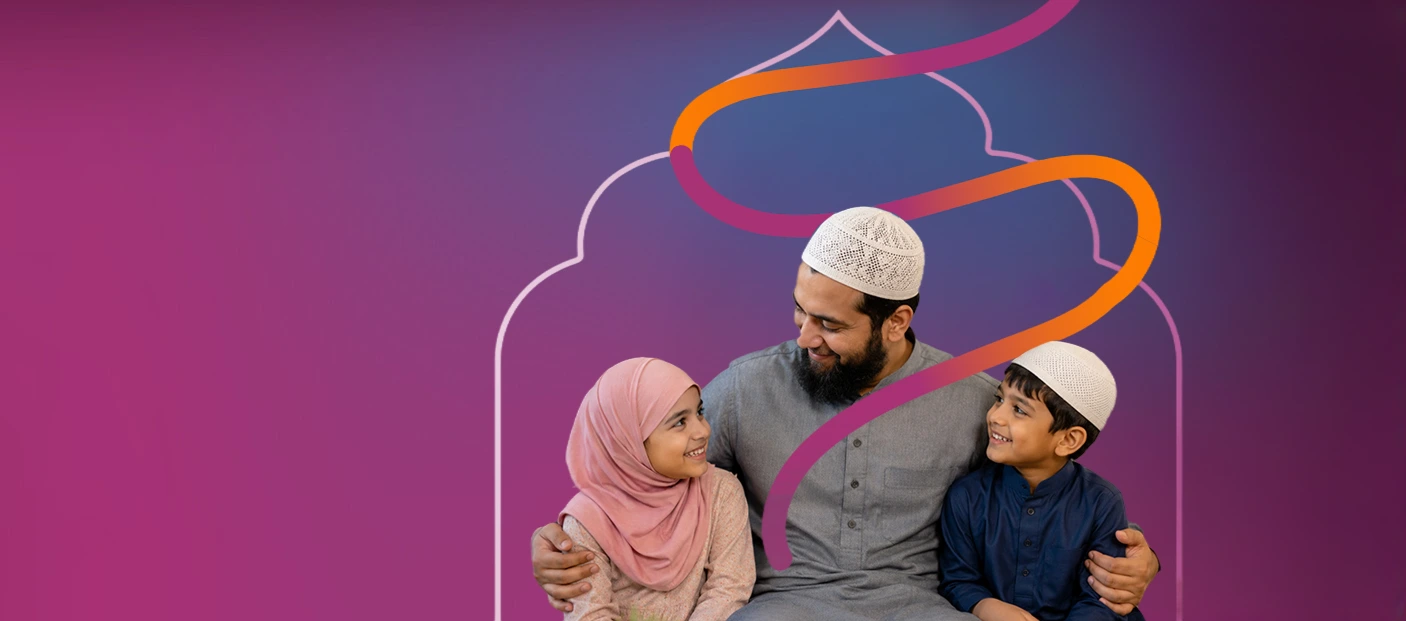
In Islam, fatherhood is a responsibility honoured by Allah ﷻ. A father is not only a provider, but a caretaker, protector, mentor, and source of compassion within the family. Through faith, kindness, and service, fathers have the ability to shape the hearts, character, and future of their children.
Allah ﷻ says:
The word qawwamun reflects a deep responsibility: to stand firmly in support of the family, to protect, provide, guide, and nurture with justice and mercy. This role is not about authority alone; it is a trust from Allah ﷻ that requires compassion, patience, and accountability.
The life of Prophet Muhammad ﷺ teaches us that true leadership begins with love and gentleness.
Although he carried the responsibility of guiding an entire ummah, he remained deeply affectionate and attentive toward his family. His relationship with his daughter Fatimah (RA) is one of the most beautiful examples of a father’s love.
When Fatimah (RA) would visit him, Prophet ﷺ would stand to welcome her, greet her warmly, and honour her with kindness. His actions showed that love, respect, and emotional connection are essential parts of raising children.
Prophet ﷺ said:
This teaches us that excellence in Islam is not only measured by worship or public actions, but also by how we treat those closest to us.
A father’s influence extends beyond what he provides financially. Children learn from what they see: how their father speaks, how he handles difficulties, how he shows mercy, and how he connects with Allah ﷻ.
Prophet Ibrahim (AS) is an example of a father who nurtured faith and trust in Allah. When he shared with his son Ismail (AS) the command of Allah regarding the sacrifice, their relationship was built on love, respect, and obedience to Allah.
Allah ﷻ describes this beautiful exchange:
This moment reflects the strength of a relationship built on faith, communication, and mutual respect.
The companions of the Prophet ﷺ understood that raising children was a responsibility before Allah ﷻ.
Companions such as Abdullah ibn Umar (RA) carried forward the teachings of Islam by embodying knowledge, humility, and devotion. Their homes became places where faith was nurtured and values were passed from one generation to another.
Prophet ﷺ reminded believers:
This responsibility applies within the home. Fathers are entrusted with guiding their families with wisdom, mercy, and care.
At Nisa Foundation, we see every day how supportive and responsible fathers contribute to stronger families, confident children, and healthier communities.
When fathers embrace their role with compassion and integrity, the impact reaches far beyond the home. Children benefit from security, guidance, and positive examples. Daughters grow up seeing the value of respect and kindness. Sons learn what it means to become men of character and responsibility.
At the same time, we recognize that some women and children experience circumstances where that support is absent. Nisa Foundation continues to support families navigating difficult situations by helping women and children find safety, stability, and hope.
Strong communities begin with nurturing strong character from an early age.
Through Nisa Learning’s Raising Rijaal program, we are investing in the next generation of Muslim men by providing mentorship, Islamic learning, and character development. The goal is to nurture boys into men who understand faith, responsibility, compassion, and service.
These are the qualities needed in the fathers, husbands, and leaders of tomorrow.
May Allah ﷻ bless fathers who strive to lead their families with mercy, patience, and faith. May He strengthen families, protect children, and allow every act of care and sacrifice to become a source of ongoing reward.
May Allah ﷻ help us build homes filled with love, guidance, and compassion — homes that reflect the beautiful teachings of Islam.
















































.webp)


.webp)










.webp)






.svg)


.svg)


