

.svg)


DONATE

September is Suicide Prevention Month. It's a time to have compassionate conversations about suicide, challenge stigma, and remind people that support is available.
For someone experiencing suicidal thoughts, emotional pain can feel overwhelming. Trauma, grief, loneliness, abuse, financial stress, relationship difficulties, and other challenges can make it difficult to imagine that things could ever feel different.
Experiencing suicidal thoughts is a sign that someone is hurting and needs support, not judgment or shame.
Islam teaches us about Allah's mercy, the value of life, and the importance of caring for one another. The Quran reminds us:
"Do not despair of the mercy of Allah."
— Quran 39:53
And:
"Indeed, with hardship comes ease."
— Quran 94:5
For someone in deep emotional pain, these reminders can offer comfort and hope. But faith should never be used to dismiss someone's suffering or suggest that they simply need to pray more or have stronger iman.
Seeking help and trusting Allah can go hand in hand.
Tawakkul does not mean doing nothing. We take the means available to us while placing our trust in Allah. Just as we seek medical care when our bodies are unwell, we can seek professional support when we are struggling emotionally or mentally.
Reaching out to a counsellor, calling a helpline, creating a safety plan, or seeking emergency care is not a failure of faith. It can be part of caring for the life and trust Allah has given us.
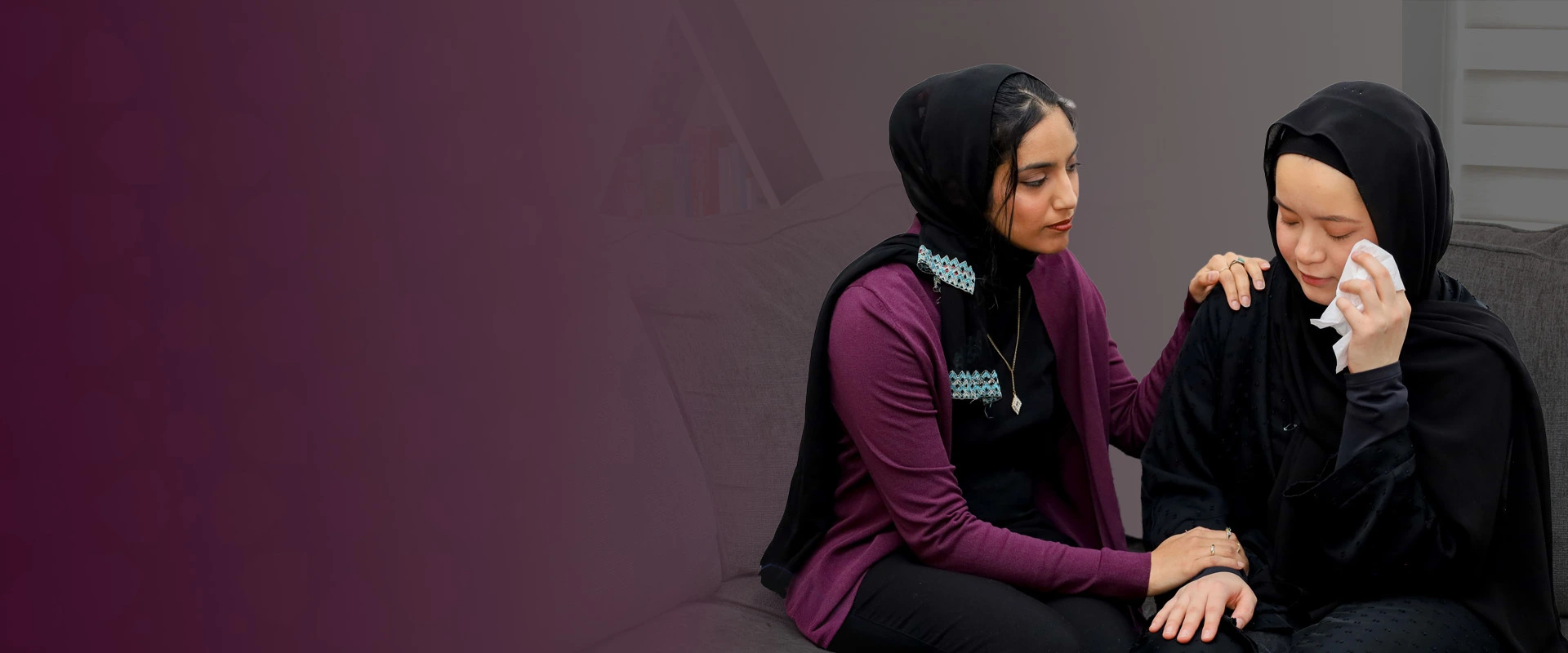
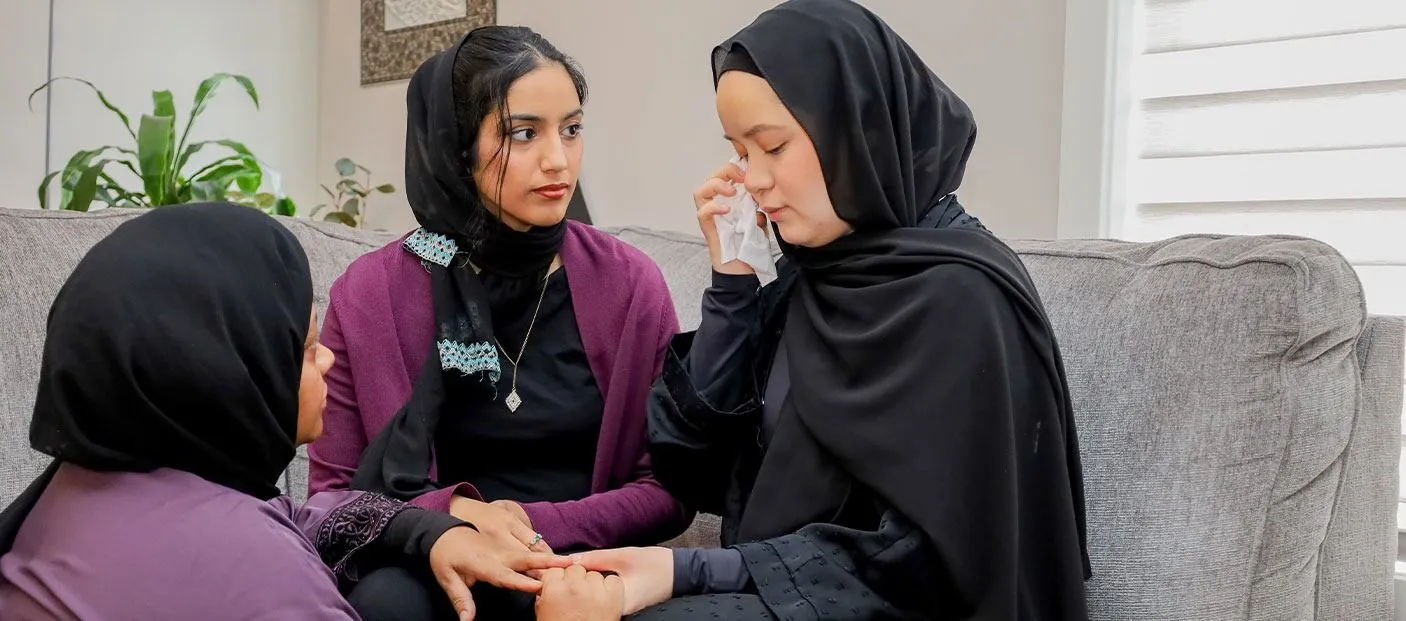
You don't need to be a mental health professional to show someone that they matter.
Listen without judgment: Give them space to speak without immediately trying to solve the problem.
Take them seriously: Don't dismiss suicidal thoughts or assume someone is simply seeking attention.
Ask directly: If you're concerned someone may be thinking about suicide, asking directly can open an important conversation.
Help them find professional support: Encourage them to seek support by calling or texting 9-8-8, calling 9-1-1 in an emergency, going to a local emergency room, or connecting with a mental health or medical professional.
Stay connected: A phone call, message, visit, or simple check-in can help someone feel less alone.
In Muslim communities, our first instinct may be to offer a verse, dua, or reminder of Allah's mercy. These can be meaningful sources of comfort, but they shouldn't replace listening and practical support.
Instead of saying, "You just need to pray more," try:
"I'm really glad you told me. I'm here with you, and we can find help together."
Sometimes, the most meaningful thing we can offer is simply our presence.
For women experiencing emotional distress, mental health challenges, or difficult life circumstances, Nisa Foundation offers free and confidential support.
Nisa Helpline provides free, confidential peer support for women who need someone to talk to. Whether you're experiencing emotional distress, relationship difficulties, isolation, or simply need someone to listen, the Helpline offers a safe space to reach out and can help connect you with appropriate resources.
Support is available in English, French, Urdu, Arabic, and Somali, from 8 AM to 12 AM EST, 7 days a week. Call the Nisa Helpline at 1-888-456-8043.
Please note: Nisa Helpline is not a crisis centre. If you are experiencing suicidal ideation or are in a crisis, please seek professional help immediately by calling or texting 9-8-8, calling 9-1-1 if you are in immediate danger, or going to your local emergency room.
Learn More About the Nisa Helpline →
Nisa Foundation also provides free mental health support for women navigating difficult experiences.
Professional mental health support can provide a safe space to process emotions, develop coping strategies, and work through challenging experiences.
You don't have to wait until you're at your breaking point to ask for help.
Explore Nisa Mental Health Services →
If you or someone you care about is experiencing suicidal thoughts, having practical tools available can be an important part of preparing for difficult moments.
Coping with Suicidal Ideation, a resource guide by Anisa Diab, M.S., NCC, offers practical tools and guidance, including:
Download Coping with Suicidal Ideation →
Keep the guide somewhere accessible or share it with someone who may benefit from these resources.
Suicide prevention isn't only about what happens during a crisis. It's also about creating communities where people feel seen, valued, welcomed, and supported.
As Muslims, we are encouraged to care for one another and respond to hardship with compassion.
Sometimes prevention looks like checking in on a friend. Sometimes it means sitting with someone who is struggling, helping them find a therapist, or making the call with them.
And sometimes, it simply means reminding someone:
"You matter. Your life matters. And you don't have to go through this alone."




































































.webp)


.webp)














.webp)







.svg)


.svg)


