

.svg)


DONATE

The start of a new school year can bring excitement, but it can also bring uncertainty. New teachers, new classrooms, different routines, changing friendships, and the return of academic expectations can feel overwhelming for children.
For some children, the transition is even more difficult. A recent move, changes at home, financial stress, family separation, or other major life changes can make the return to school feel like a lot to manage.
As parents and caregivers, we may not be able to remove every source of stress, but we can help children feel safe, prepared, and supported.
Here are some ways to help your child adjust to a new school year and manage back-to-school stress.
One of the biggest changes children experience at the beginning of a school year is a shift in their daily routine.
Later bedtimes, relaxed mornings, and unstructured summer days suddenly become earlier wake-ups, packed lunches, homework, and scheduled activities.
Rather than changing everything overnight, start easing your child back into a school routine a few days or weeks before school begins.
You can gradually:
Having a predictable routine can help children know what to expect and reduce some of the uncertainty surrounding the first few days of school.
Children don't always know how to explain that they're feeling anxious about school.
Instead of asking only, "Are you excited for school?" try asking open-ended questions such as:
Give your child space to answer honestly without immediately trying to fix the problem.
Sometimes, children simply need to know that their feelings are being heard.
You can reassure them by saying, "It makes sense that you're nervous. Starting something new can feel uncomfortable, and you don't have to figure everything out on the first day."
For younger children, returning to school can bring separation anxiety. Even children who have attended school before may struggle when starting a new grade, changing classrooms, or adjusting to a new teacher.
A consistent goodbye routine can help.
Keep goodbyes warm and reassuring, but avoid making them unnecessarily long. Let your child know when you will see them again and remind them of what will happen after school.
For example:
"You're going to have your morning at school, and I'll be here to pick you up afterward. You are safe, you are loved, and we'll see each other soon, Insha'Allah."
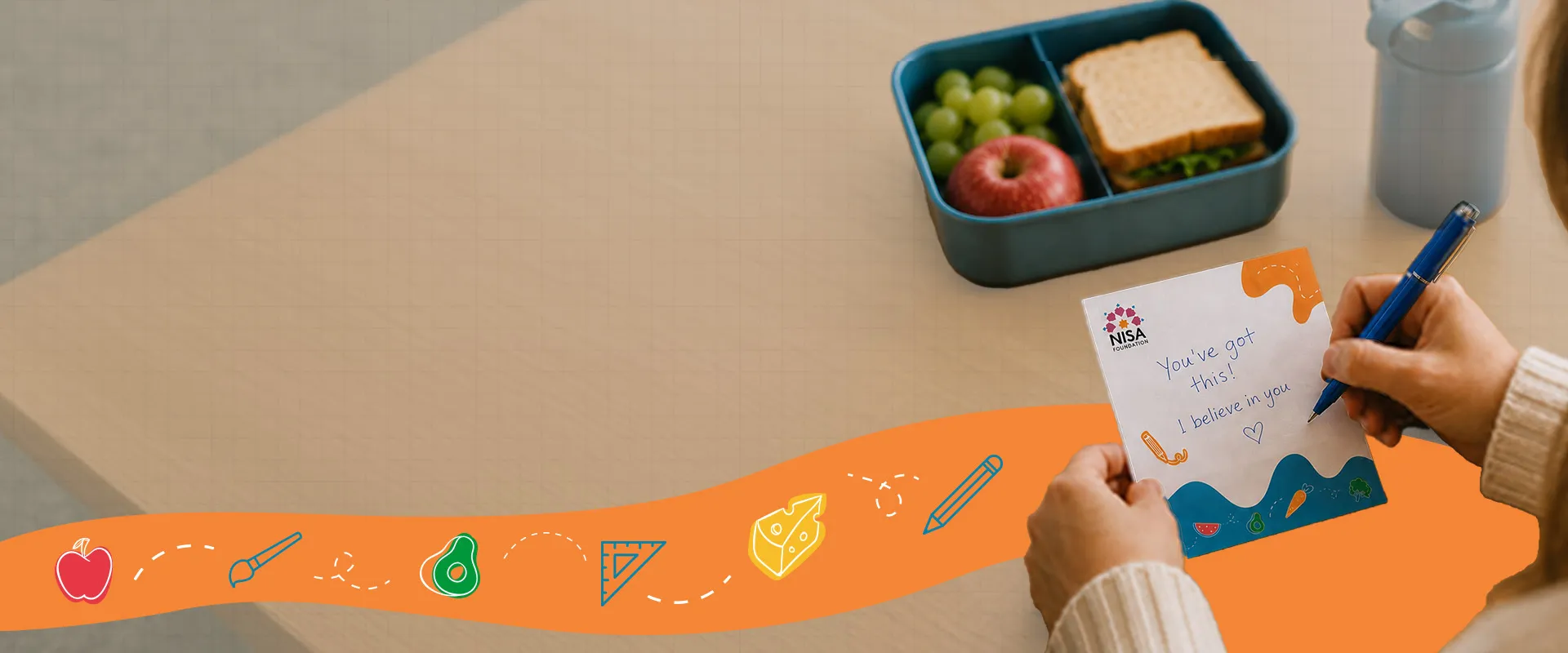
A small note in their lunchbox, a family photo in their backpack, or another familiar reminder from home can also help younger children feel connected throughout the day.
Looking for a simple way to add a little extra encouragement to their lunchbox? Download Nisa Foundation’s free Lunch Notes and tuck a note of love, encouragement, or a heartfelt reminder into their lunch each day.
It can be tempting to respond to a worried child with, "Don't worry. Everything will be fine."
Although the intention is comforting, children may sometimes feel that their concerns aren't being taken seriously.
Instead, acknowledge the feeling before offering reassurance.
Try:
"I can see why that might make you nervous."
Then help them think through what they can do if the situation happens.
For example, if your child is worried about not knowing anyone at school, you could practice how they might introduce themselves to another child or ask a teacher for help.
Reassurance is most powerful when it helps a child feel both understood and capable.
Friendships can be one of the biggest sources of excitement and stress during the new school year.
Your child may be worried about making friends, being separated from an existing friend group, dealing with conflict, or fitting in.
Instead of focusing only on whether they have "enough" friends, help them develop simple social skills they can use throughout the year.
You might practice:
Remind your child that friendships can take time. They don't need to find their best friend on the first day of school.
For a child experiencing a major change at home, back-to-school stress can feel especially intense.
A child may be adjusting to a new home, a new community, changes in family circumstances, or uncertainty about what comes next. Even if they don't talk about these experiences directly, they may show stress through changes in sleep, mood, appetite, behaviour, or school performance.
During these times, consistency can be especially important.
Simple things like regular meals, predictable bedtime routines, time together, and knowing who will pick them up from school can provide a sense of stability.
Children don't need every uncertainty to disappear before they can feel secure. They need trusted adults who remind them that they are not facing those changes alone.
Busy school mornings can quickly become focused on getting dressed, packing lunches, finding shoes, and getting out the door.
Try to create small moments of connection whenever possible.
This could be:
These small moments can remind children that, even when their days are busy or difficult, they have a safe place to return to.
Children need tools to manage stress just as adults do.
Depending on their age, encourage activities that help them slow down and reset, such as reading, drawing, playing outside, physical activity, deep breathing, or spending time with family.
For Muslim families, spiritual practices can also become a comforting part of a child's routine.
A simple dua before leaving for school, a few minutes of Qur'an, or a reminder to turn to Allah when they feel worried can help children develop healthy ways of coping with difficult emotions.
The goal isn't to teach children that they should never feel anxious. It's to help them understand that difficult feelings can be managed and that they can seek support when they need it.
Some back-to-school nervousness is completely normal. However, ongoing or intense changes may indicate that your child needs additional support.
Pay attention to things such as:
If you notice concerning or persistent changes, consider speaking with your child's teacher, school support staff, healthcare provider, or a qualified mental health professional.
Asking for help is not a sign that you have failed as a parent. Sometimes children simply need more support than one person can provide.
A new school year can come with a lot of expectations: good grades, new friendships, extracurricular activities, and being "successful."
Remind your child that they don't have to have everything figured out.
They are allowed to make mistakes.
They are allowed to ask questions.
They are allowed to have difficult days.
And they are allowed to take their time adjusting.
Instead of focusing only on achievements, celebrate qualities like kindness, perseverance, honesty, curiosity, and courage.
A new school year is more than a new set of classes. For children, it can represent a major emotional transition.
Some children will walk into their classrooms feeling confident and excited. Others may need more time, reassurance, and support before they feel comfortable.
What matters most is knowing that they have someone in their corner.
A calm conversation, a predictable routine, a listening ear, or a simple reminder that they are loved can make a meaningful difference.
And when a child is facing challenges beyond the normal stress of starting school, having access to a supportive community can matter even more.
At Nisa Foundation, we believe that children deserve to feel safe, supported, and cared for as they grow. By supporting mothers and families through difficult circumstances, we can help create stronger foundations for children to learn, grow, and pursue their dreams.
This school year, let's remind every child: you don't have to face big changes alone.






































































.webp)


.webp)

















.webp)








.svg)


.svg)


